

In today’s fast-paced academic and digital environment, shortened terms and slang expressions have become increasingly common, especially among students and professionals. One such term that frequently appears in educational discussions is “orgo.” While it may seem unfamiliar to some, it is widely used in specific contexts, particularly in science and chemistry-related fields. Understanding the meaning of “orgo” is important for students, educators, and anyone interested in academic terminology. This article provides a comprehensive explanation of the term “orgo,” its origin, usage, and significance, helping readers gain a clear understanding of its role in modern language.
What Does Orgo Mean?
The term “orgo meaning” is commonly used as an informal abbreviation for organic chemistry, a branch of chemistry that focuses on the study of carbon-containing compounds. Instead of saying “organic chemistry” in full, students and educators often use “orgo” as a shorthand to make communication quicker and more convenient.
For example, a student might say, “I have an orgo exam tomorrow,” which simply means they have an organic chemistry exam. This abbreviation is widely recognized in academic environments, particularly in universities and colleges where organic chemistry is a core subject.
Origin of the Term “Orgo”
The origin of “orgo” comes from the natural tendency to shorten longer words into simpler, more manageable forms. In academic settings, where complex terminology is common, abbreviations help streamline communication. “Orgo” likely developed as a convenient way for students to refer to organic chemistry without repeating the full term.
Over time, the term gained popularity and became a standard part of student vocabulary, especially in science-related fields. Its widespread use demonstrates how language evolves to meet the needs of specific communities.
Orgo in Chemistry
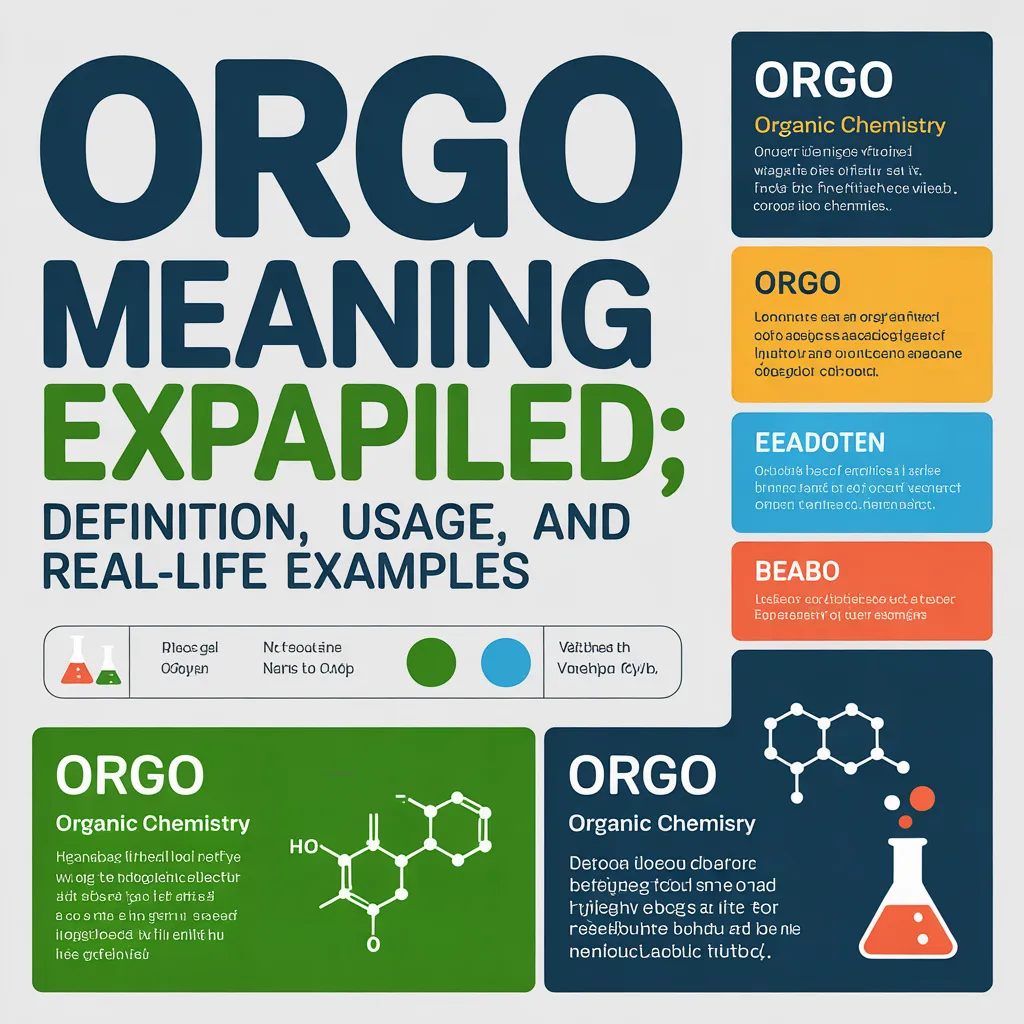
In the context of chemistry, “orgo” refers specifically to organic chemistry, which is one of the most important and challenging branches of the subject. Organic chemistry involves the study of molecules that contain carbon, including compounds found in living organisms as well as synthetic materials.
Students often consider “orgo” to be a demanding subject due to its focus on complex structures, reactions, and mechanisms. Despite its difficulty, it is essential for many fields, including medicine, pharmacy, and biotechnology. As a result, the term “orgo” is frequently used in academic discussions, study groups, and classroom settings.
Common Uses of “Orgo”
The term “orgo” is primarily used in educational contexts, but its usage can vary depending on the situation. Students often use it in casual conversations, such as discussing assignments, exams, or study sessions. For instance, phrases like “orgo homework,” “orgo class,” or “orgo lab” are commonly heard in academic environments.
In addition to spoken language, “orgo” is also used in written communication, including notes, online forums, and social media posts. Its simplicity and clarity make it an effective way to convey information quickly.
Why Understanding “Orgo” Is Important
Understanding the meaning of “orgo” is important for anyone involved in academic or scientific fields. For students, it helps them communicate more effectively with peers and instructors. For educators, it provides insight into the language commonly used by students.
Moreover, recognizing terms like “orgo” highlights the importance of context in language. Without understanding the context, such abbreviations can be confusing, especially for those who are new to the subject. By learning these terms, individuals can better navigate academic environments and engage in meaningful discussions.
Orgo Beyond Chemistry
While “orgo” is most commonly associated with organic chemistry, its structure reflects a broader trend in language where longer terms are shortened for convenience. Similar abbreviations can be found in various fields, demonstrating how language adapts to meet the needs of different communities.
Although “orgo” is primarily used in academic settings, its popularity has also extended to online platforms, where students share experiences, resources, and tips related to their studies. This further reinforces its role as a widely recognized term within its niche.
Conclusion
The term “orgo meaning” is a simple yet powerful example of how language evolves to meet the needs of its users. As an abbreviation for organic chemistry, it has become an essential part of student vocabulary, particularly in science-related fields. Its widespread use reflects the importance of efficiency and clarity in communication, especially in academic environments. By understanding the meaning and usage of “orgo,” readers can gain valuable insight into both the subject of organic chemistry and the way language adapts over time. Whether you are a student, educator, or simply curious about academic terminology, knowing what “orgo” means can enhance your understanding and communication skills.
Frequently Asked Questions (FAQ)
1. What does “orgo” mean?
“Orgo” is an informal abbreviation for organic chemistry.
2. Where is the term “orgo” commonly used?
It is mainly used in academic settings, especially by students studying chemistry.
3. Is “orgo” an official term?
No, it is an informal slang term rather than a formal scientific term.
4. Why do students use “orgo”?
They use it for convenience and quicker communication.
5. Is organic chemistry difficult?
Many students find it challenging due to its complex concepts and reactions.