
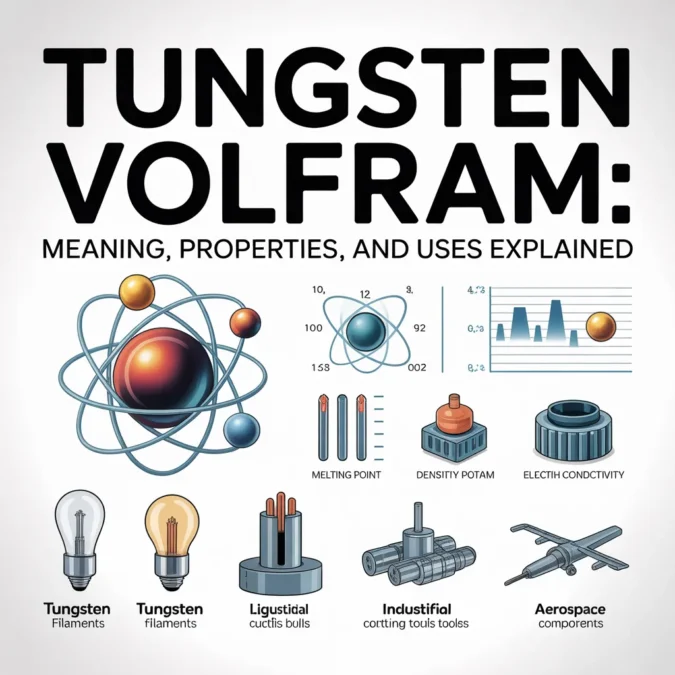

The terms “tungsten volfram” (more commonly spelled “wolfram”) refer to the same chemical element, one of the most important metals in modern industry. Known for its exceptional strength and heat resistance, tungsten plays a crucial role in manufacturing, electronics, and engineering. Despite being a single element, it is known by two different names, which often causes confusion among students and researchers. This article provides a comprehensive guide to tungsten (volfram), explaining its meaning, properties, history, uses, and why it remains one of the most valuable elements in the world today.
What Is Tungsten (Volfram)?
tungsten volfram is a chemical element with the symbol W and atomic number 74. It is a dense, hard metal known for having the highest melting point of all known elements. The name “tungsten” comes from a Swedish term meaning “heavy stone,” while “wolfram” originates from a German word related to the mineral from which the element was first extracted.
Because of its unique properties, tungsten is widely used in applications that require extreme durability and resistance to heat. Its ability to withstand high temperatures without melting makes it essential in industries such as aerospace, electronics, and manufacturing.
Why Does Tungsten Have Two Names?
The existence of two names for the same element is rooted in history and language. The name “tungsten” is commonly used in English-speaking countries, while “wolfram” is preferred in many European languages, including German and Spanish. The chemical symbol W is derived from “wolfram,” which is why the symbol does not match the English name.
This dual naming system reflects the global nature of scientific discovery, where different regions contributed to the identification and study of the element. Today, both names are accepted, although “tungsten” is more widely used in general contexts.
Properties of Tungsten
Tungsten is known for several remarkable physical and chemical properties. It has the highest melting point of any metal, making it ideal for use in high-temperature environments. It is also extremely dense and strong, which allows it to maintain its shape and integrity under extreme conditions.
In addition to its strength, tungsten has excellent electrical conductivity, which makes it useful in electronic applications. Its resistance to corrosion and wear further enhances its value in industrial settings, where durability is essential.
Industrial and Everyday Uses of Tungsten
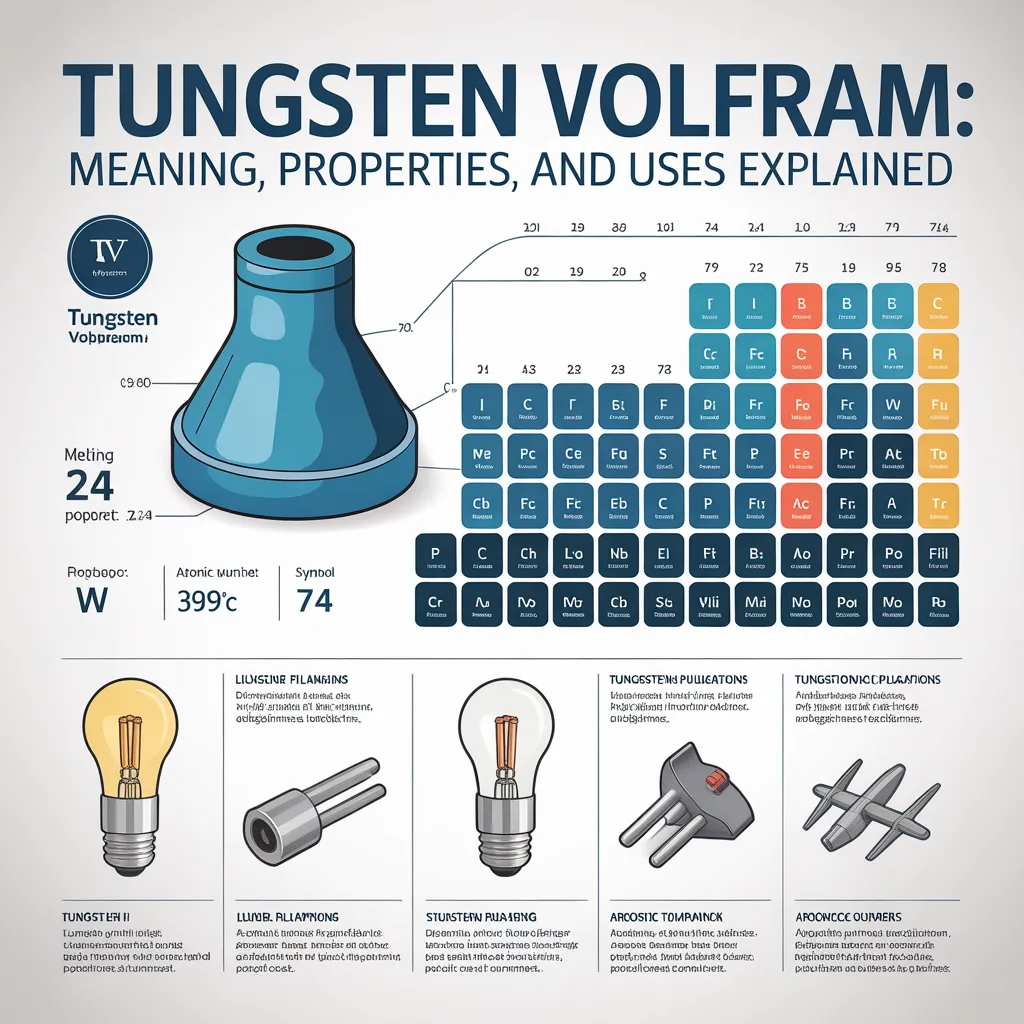
Tungsten is used in a wide range of applications, from everyday products to advanced industrial systems. One of its most well-known uses is in the production of light bulb filaments, where its high melting point allows it to produce light without burning out quickly.
In modern industries, tungsten is used in cutting tools, military equipment, and aerospace components. Its hardness makes it ideal for drilling and machining, while its heat resistance makes it suitable for use in engines and high-performance systems.
Additionally, tungsten is used in electronics, medical equipment, and even jewelry. Its versatility and durability make it one of the most valuable metals in the world.
History of Tungsten Discovery
Tungsten was first identified in the 18th century, with scientists isolating it from minerals such as wolframite and scheelite. The discovery marked an important milestone in the development of modern chemistry and materials science.
Over time, researchers studied its properties and found new ways to use it in industrial applications. Today, tungsten is considered a critical material for many advanced technologies.
Why Tungsten Is Important Today
In today’s world, tungsten volfram remains essential for technological advancement and industrial development. Its unique combination of strength, heat resistance, and durability makes it irreplaceable in many applications. As industries continue to evolve, the demand for tungsten is expected to grow.
From electronics to aerospace engineering, tungsten plays a vital role in supporting modern infrastructure and innovation.
Conclusion
tungsten volfram, also known as wolfram, is one of the most remarkable elements in the periodic table. Its unique properties, including extreme heat resistance and exceptional strength, make it indispensable in a wide range of industries. The dual naming of tungsten and wolfram reflects its rich history and global significance. By understanding this element, its properties, and its uses, we gain insight into the materials that drive modern technology and industrial progress.
Frequently Asked Questions (FAQ)
1. What is tungsten (volfram)?
It is a chemical element with symbol W, known for its strength and high melting point.
2. Why is tungsten also called wolfram?
Because the name comes from the mineral “wolframite,” and different languages use different names.
3. What is tungsten used for?
It is used in light bulbs, cutting tools, electronics, and aerospace industries.
4. What is special about tungsten?
It has the highest melting point of any metal.
5. Is tungsten important today?
Yes, it is essential for modern technology and industrial applications.